
Guildford vs Woking.
Last updated November 2026 ■
Words by Siyah Koen


Rent, commute and lifestyle compared.
Guildford and Woking are both towns in Surrey, just southwest of London. Both sit on the same railway line into London Waterloo, one of the city’s main train stations. The journey from either town takes well under an hour, making both an easy commute into central London. But that’s where the similarities end.
Guildford is built around a castle, a river and a university. It’s a place with its own history, long before anyone thought about commuting. Woking is different. It started life as a railway junction, and has spent the last decade rebuilding its town centre around that same line. Once the working day is done, the two towns feel nothing alike. Guildford leans historic and independent. Woking leans newly rebuilt and retail-led. Either way, both suit anyone splitting the week between a desk in London and a weekend closer to home.
Key takeaways
Guildford's fastest direct trains reach London Waterloo in around 35 to 40 minutes. Woking is quicker, taking as little as 24 minutes, though both run frequent services throughout the day.
Rent in Guildford and Woking sits in a similar bracket. Neither town is reliably cheaper than the other. What the rent actually buys day to day matters more than the headline figure.
Guildford has a wider range of green space, including the Surrey Hills Area of Outstanding Natural Beauty, Stoke Park and the River Wey. Woking's Horsell Common is larger but wilder.
Guildford tends to come out ahead for young professionals weighing up commute, cost and everyday life together, helped by all-inclusive rent at The Guild by Morro.
The towns: a county town and a commuter hub
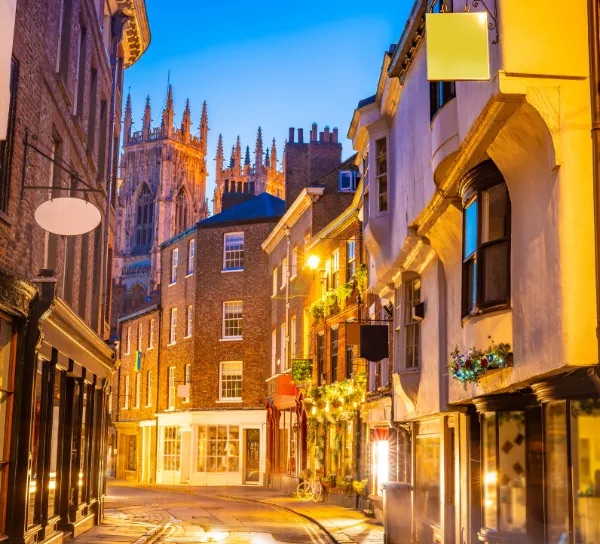
Guildford is Surrey's county town. It's built around a Norman castle and a steep, cobbled High Street that runs down to the River Wey. A long standing university adds a steady energy to the town. Plenty of graduates stay on locally once term ends. They're drawn by the same jobs and transport links that pull in professionals from further afield.
Woking grew up differently. It expanded around its railway junction in the nineteenth century, and has stayed a commuter and retail town ever since. The town centre has been rebuilt several times, most recently around the Victoria Place development. It's a practical, well connected place rather than a destination in its own right. That's starting to change as the centre fills back in.
Both sit inside the Surrey commuter belt. But each has its own centre, its own identity, and increasingly its own reasons to stay local on a Saturday rather than head into town.
Read more: Is Guildford a good place to live?
The neighbourhood: schools, transport and demand
Guildford draws steady demand from commuters leaving London for more space, helped by well regarded schools around Burpham and Merrow and direct, frequent trains into Waterloo. It's one of the more affluent, desirable parts of the South East of England, which only sharpens that demand. And it's the right size for a real sense of community: big enough that there's always something new to find, small enough that regulars get recognised at the local café or pub.
Woking pulls from the same pool of London leavers, with its own well regarded schools and a station handling some of the fastest services on the line. Demand is high on both sides. The difference comes down to what's on offer once the commute is over.
The cost: what the rent actually buys
Rent in Guildford and Woking sits in a similar bracket for most renters. Neither town is dramatically more expensive than the other. That puts more weight on what the rent actually buys day to day, not just the headline figure.
At The Guild by Morro, studios start from £1,470 a month. That's one payment covering the apartment, bills, gym membership, co-working space and laundry. No separate bills to chase. Nothing extra to budget for beyond rent.
The commute: same line, different speeds
Guildford to London takes around 35 to 40 minutes on the fastest direct trains, which run several times an hour at peak times with South Western Railway. Woking to London is quicker, with the fastest direct trains reaching Waterloo in as little as 24 to 30 minutes.
Both stations run frequent direct services throughout the day, so neither town leaves a renter waiting long on the platform. The gap between them is real: typically 10 to 15 minutes each way, depending on the service. It's the one place where Woking has a genuine edge, though not enough on its own to outweigh everything else Guildford offers.
Green space: two different kinds of outdoors
Guildford sits at the foot of the Surrey Hills Area of Outstanding Natural Beauty. Box Hill, Leith Hill and the North Downs Way are all within easy reach. Closer to town, Stoke Park covers around 50 hectares, with a lido, tennis courts and open grassland. The River Wey towpath runs straight through the centre, out towards the National Trust site at Dapdune Wharf.
Woking's standout is Horsell Common. It's 355 hectares of protected heathland, and a Site of Special Scientific Interest. It's best known as the fictional landing site in H. G. Wells's The War of the Worlds. The Basingstoke Canal towpath and Woking Park add further walking and cycling routes close to the centre.
Horsell Common alone is bigger than anything inside Guildford's boundary. But Guildford's combination of hills, river and parkland gives it more variety within a shorter walk.
So when people say Guildford has the best of both worlds, they mean it quite literally. Woodland and hills start where the suburbs end. It's the kind of countryside that explains why so many leave the city in the first place. Not because city life is bad. It's because having this much green space on the doorstep changes how free time gets spent.
The weekend: what's actually on
Weekends in Guildford have an independent feel, built around small venues rather than big chains. There's live music and theatre for a proper night out at spots like G Live and the Yvonne Arnaud Theatre, and smaller spaces for more offbeat gigs and exhibitions. The cobbled High Street is as much for wandering as shopping, mixing familiar names with independent shops, galleries and markets, and the food scene covers everything from a sit-down meal to something quick and casual. Riverside pubs like the Kerrera Bar are where the evening tends to end up.
For a slower pace, see Best spas in Guildford and Surrey.
Woking has put serious money into its town centre. Victoria Place alone brings a cinema, bowling, a Hilton and more than a hundred shops under one roof, and the Woking Theatre is one of the largest touring theatres outside London. For something quieter, the Lightbox gallery and museum sits by the canal.
Both towns have clearly invested in their centres, just in different directions. Guildford's is older and more varied, and it keeps a livelier evening crowd across more nights of the week. Woking's is newer and more polished, built almost entirely around Victoria Place.
So, which area wins?
Guildford wins on lifestyle. Woking wins on commute time. Guildford pairs a proper town centre with genuine green space on the doorstep: the Surrey Hills, Stoke Park and the River Wey are all a short walk from the station, in a way nothing inside Woking's boundary quite matches. On cost, neither town is dramatically more expensive than the other. Woking's edge is speed, often ten minutes or more each way.
Neither is a wrong choice. Guildford suits anyone happy to trade ten to fifteen minutes of commute time for more green space and a slower pace at the end of the day. Woking suits anyone who wants the fastest possible commute and a newly rebuilt town centre.
For anyone leaning towards Guildford, The Guild by Morro is worth a look. It's a short walk from Guildford station and the High Street, with studios from £1,470 a month, fully furnished and bills included. There's also a gym, co-working space, communal lounges and 24/7 concierge support, so tenants can skip the admin of setting up a flat from scratch.
FAQs
1. Is Guildford or Woking cheaper to rent in?
Guildford and Woking sit in a similar rent bracket overall. Neither is dramatically cheaper than the other. At The Guild by Morro, studios start from £1,470 a month, with bills, gym membership and co-working space included. That makes the comparison more about value than headline rent.
2. How long does it take to get into central London from Guildford vs Woking?
From Guildford, the fastest direct trains to London Waterloo take around 35 to 40 minutes. From Woking, the fastest direct trains take roughly 24 minutes. Both towns run frequent services throughout the day.
3. Is Guildford or Woking better for things to do at the weekend?
Guildford has the wider spread of things to do: live music venues, an independent food scene, and a historic High Street that stays busy well into the evening. Woking's Victoria Place redevelopment is impressive, but leans more towards shopping and chain restaurants.
4. Which has more green space, Guildford or Woking?
Guildford has more variety overall. The Surrey Hills, the River Wey and Stoke Park are all within easy reach of the centre. Woking's Horsell Common, at 355 hectares, is the single largest green space near either town.
5. Is Guildford a good place to live for young professionals?
Yes. Fast trains to London, a lively but grown-up social scene, a varied restaurant and pub scene, and quick access to the Surrey Hills make Guildford a strong base for young professionals.
More stories

Is Guildford a good place to live?
Read article
Active days out in Surrey
Read article
Best of Guildford and Surrey spas
Read article
How to deal with loneliness
Read article
Best pubs with gardens in Guildford
Read article
Surrey’s top 10 days out
Read article
House Plants and Their Benefits: Elevate Your Indoor Space
Read article
Best Pubs in Guildford for a Sunday Roast
Read article
Christmas time in Guildford
Read article Benefits of small spaces
Read article
Why rent with Morro
Read article
Walking the Surrey Hills
Read article
The Guild
Read article